
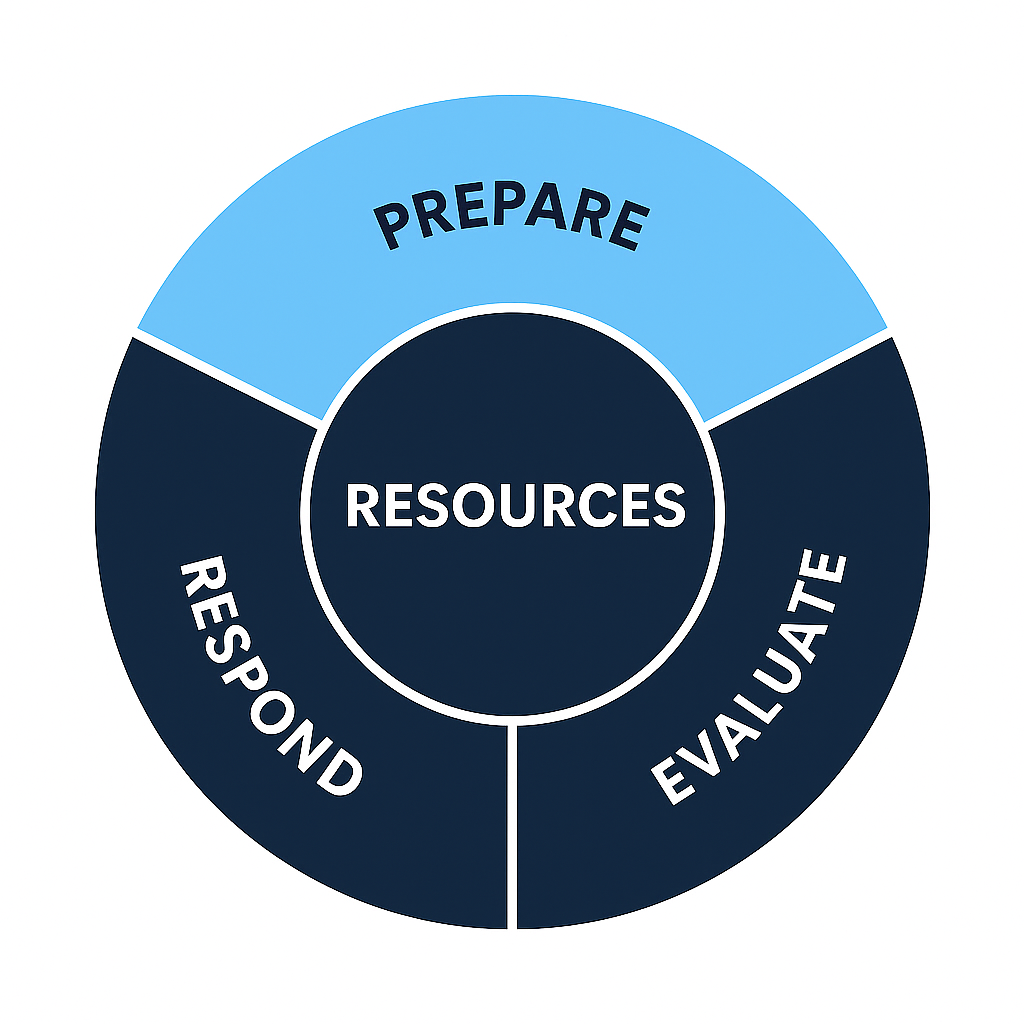
Prepare Overview
Before building an overdose anomaly surveillance protocol, it is critical to understand the local circumstances that may contribute to overdose events. Seasonal patterns or shifts in the drug supply can all serve as risk factors. By identifying these circumstances jurisdictions can build a clearer picture of key risk factors and the populations most at risk.
This section guides you through three fundamental steps
Before building an overdose anomaly surveillance protocol, it is critical to understand the local circumstances that may contribute to overdose events. Seasonal patterns or shifts in the drug supply can all serve as risk factors. By identifying these circumstances jurisdictions can build a clearer picture of key risk factors and the populations most at risk.
This section guides you through three fundamental steps

Early Planning Steps

Developing Case Definitions

Developing a Logic Model
Early Planning Steps
Developing Case Definitions
Developing a Logic Model
Great Lakes Inter-Tribal Epidemiology Center (GLITEC): Behind the Data, Supporting Sovereignty
The Great Lakes Inter-Tribal Epidemiology Center (GLITEC) serves thirty-four Tribes and four Urban Indian Organizations across Michigan, Wisconsin, Minnesota, and Chicago. GLITEC provides critical backend data support while honoring Tribal data sovereignty. GLITEC’s role is to assist and empower Tribes in responding to overdose concerns while respecting each Tribes’ sovereignty and decision-making when it comes to their overdose anomaly response. While GLITEC does not initiate overdose responses, they offer response guidance, prevention, and provide resources to Tribes to reduce the risk of overdose. GLITEC further monitors trends using state syndromic surveillance data and are exploring obtaining access to Overdose Detection Mapping Application Program (ODMAP), which is a real-time overdose surveillance tool to facilitate quick response to overdoses. Some Tribes in the region currently utilize ODMAP while others are exploring the option; Tribes may share overdose data with GLITEC if they choose to do so.
Great Lakes Inter-Tribal Epidemiology Center (GLITEC): Behind the Data, Supporting Sovereignty
The Great Lakes Inter-Tribal Epidemiology Center (GLITEC) serves thirty-four Tribes and four Urban Indian Organizations across Michigan, Wisconsin, Minnesota, and Chicago. GLITEC provides critical backend data support while honoring Tribal data sovereignty. GLITEC’s role is to assist and empower Tribes in responding to overdose concerns while respecting each Tribes’ sovereignty and decision-making when it comes to their overdose anomaly response. While GLITEC does not initiate overdose responses, they offer response guidance, prevention, and provide resources to Tribes to reduce the risk of overdose. GLITEC further monitors trends using state syndromic surveillance data and are exploring obtaining access to Overdose Detection Mapping Application Program (ODMAP), which is a real-time overdose surveillance tool to facilitate quick response to overdoses. Some Tribes in the region currently utilize ODMAP while others are exploring the option; Tribes may share overdose data with GLITEC if they choose to do so.
Use Cases & Real World Examples
Resources
Use Cases & Real World Examples
Resources
Continue The Toolkit
< Previous: Home
Next: Early Planning Steps>