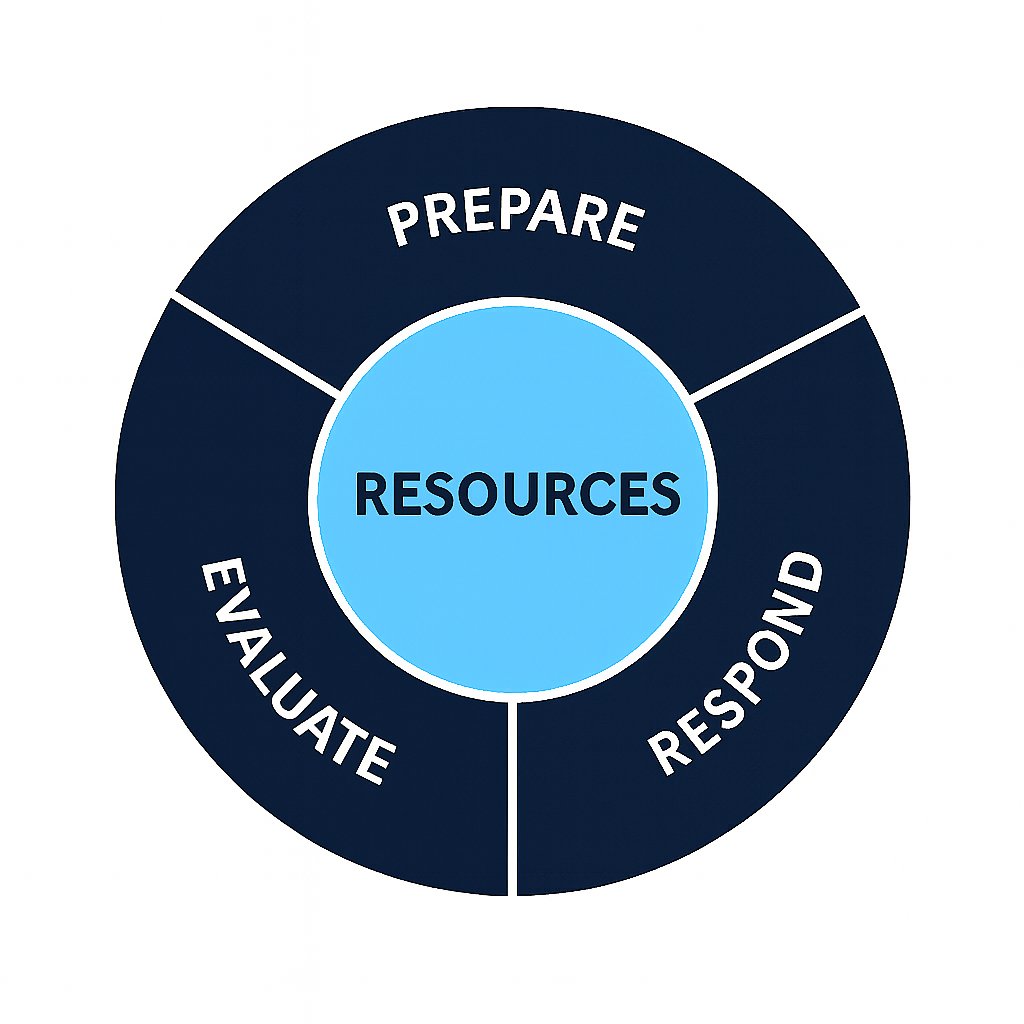
Resources Tools & Templates

Resources Tools & Templates

Timely overdose anomaly response can be enhanced by leveraging ready-to-use resources that can be adapted to meet jurisdiction-specific needs and streamline workflows. These practical tools and templates serve to facilitate consistent implementation of anomaly detection and response strategies, reduce the time and effort required to develop materials from scratch, enhance coordination and communication among cross-sector partners, and ensure efficient decision-making.

Timely overdose anomaly response can be enhanced by leveraging ready-to-use resources that can be adapted to meet jurisdiction-specific needs and streamline workflows. These practical tools and templates serve to facilitate consistent implementation of anomaly detection and response strategies, reduce the time and effort required to develop materials from scratch, enhance coordination and communication among cross-sector partners, and ensure efficient decision-making.

Titles in bolded blue are clickable and will download the resource.

Overdose Anomaly Codebook

The Coding Template provides structured code references and example logic to support overdose anomaly surveillance across common programming environments such as R, SAS, and Python. Content is intended to help jurisdictions document analytic approaches, align on terminology, and support consistent implementation of overdose surveillance methods.

Data Catalog

The Data Catalog provides an overview of key data sources that can support overdose anomaly detection and response. It includes descriptions of relevant datasets (e.g., syndromic surveillance, EMS, toxicology, mortality, etc.), recommended data elements, and potential use cases. This resource serves as a data inventory template to help jurisdictions identify, access, and leverage timely data to monitor trends, validate anomalies, and inform public health action.

Overdose Anomaly Data Sources

The Overdose Anomaly Data Sources tool identifies and describes potential data sources that can be used to inform planning, implementation, and/or evaluation of overdose anomaly response. It describes potential data sources and systems relevant to overdose anomaly response program work. When utilized in tandem with the Data Source Catalog, it supports the understanding of what national, state, or local databases and sources may be available to inform overdose anomaly detection and response work, and answer public health questions.

Partner Map

The Partner Map helps jurisdictions identify and organize key partners involved in overdose anomaly detection and response. It outlines potential collaborators across sectors—such as public health, emergency services, healthcare, law enforcement, and community-based organizations—and clarifies their roles and communication pathways. This tool supports efficient coordination, information sharing, and a more comprehensive response to emerging overdose threats.

Community Response Planning Tools

The Community Response Plan Template provides a structured framework for assembling and organizing a multidisciplinary team to respond to overdose anomalies. It guides jurisdictions in defining team roles, responsibilities, points of contact, and activation procedures. This template supports coordinated, timely, and role-specific responses, ensuring that the right people are engaged at the right time during an overdose event.

Communication Matrix

The Communication Matrix is a tool used to provide infrastructure for communication processes and information management to support public health teams with strategies to effectively communication increases in overdoses and overdose anomalies. A Communication Matrix supports the formation, organization, and tracking of key message elements to bolster effective, efficient, and sustainable communication strategies and messages that can be utilized to strengthen communication practices and guide prevention efforts in an evolving drug landscape.

Communication Messaging Guidance

The Communication Messaging Guidance offers best practices and strategies for developing and delivering effective communications related to overdose anomalies. It covers the communication process, how to craft culturally sensitive messages, select appropriate communication channels, address stigma, and engage diverse audiences. This guidance helps ensure consistent, clear, and coordinated messaging throughout the response process while supporting jurisdictions in building trust, promoting timely mobilization and alerts, and fostering collaboration with community partners during overdose response efforts. Here are a few examples from the field:

Rhode Island DOH Sample Alert to the public

Rhode Island DOH Sample Alert to providers

Stories from the Field

The Stories from the Field highlight real-world examples of how jurisdictions have detected, investigated, and responded to overdose anomalies. These case studies showcase diverse approaches, challenges, and successes, offering practical insights and inspiration for other communities. By sharing on-the-ground experiences, this section fosters peer learning and supports continuous improvement in overdose response efforts. For more real-world examples, view case studies on Resources page.

< Previous: Use Cases

Prepare

Respond

Evaluate

Resources