
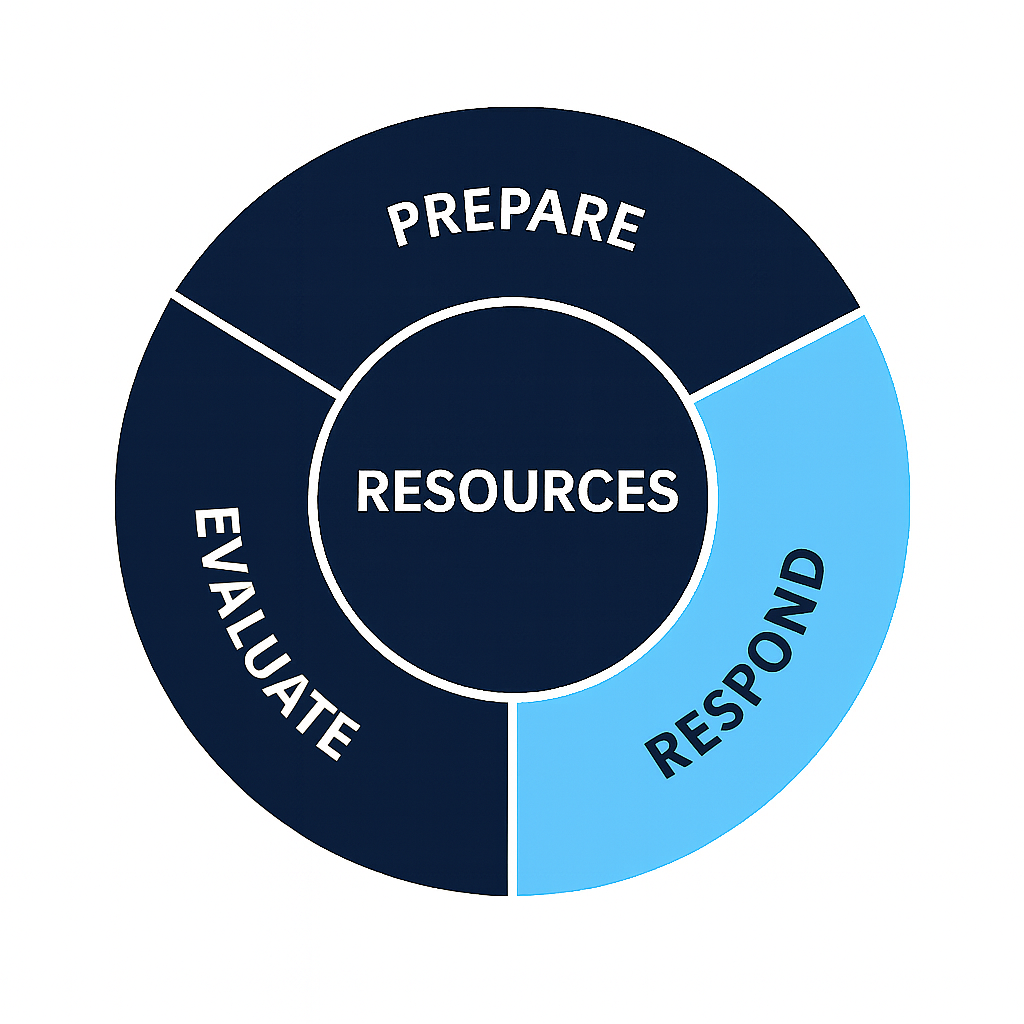
Mitigation
Conduct enhanced surveillance
Engage in public health messaging
Engage in risk mitigation activities
- Naloxone distribution and standing order programs, especially for the community and law enforcement. Note that communication about, and awareness of, standing orders is essential for their effectiveness.
- Syringe Services Programs
- Support of safe drug disposal programs and safe drug storage programs if available in a jurisdiction
- Promoting knowledge about 911 and Good Samaritan reporting laws
- Self-testing and safe use strategies to prevent overdoses (e.g., fentanyl test strips, Never Use Alone services and messaging, overdose prevention centers), as allowed by law
- Evidence-based medication-assisted treatment availability (Opioid Treatment Program Directory)
- Behavioral health and recovery programs for substance use disorder including recovery-oriented systems of care
- Peer recovery coach and navigator programs (HHS Peer and Recovery Specialist Support)
- Overdose quick response programs – Example from North Carolina
- Rhode Island Department Overdose Action Area Response (ROAAR)
- Programs to enhance linkage to care for substance use disorder
- Community messaging regarding 1) Overdose prevention, 2) What to do during an overdose, 3) What to do after an overdose, and 4) Where to obtain treatment for substance use disorders
Partner with local organizations
Hot Spots that Inform Targeted Outreach in Washington, D.C
The Washington DC Department of Health leverages a variety of data sources—including Emergency Department (ED) records, Emergency Medical Services (EMS) repositories, biospatial by ImageTrend (a platform that aggregates and standardizes EMS data in near real-time), and National Emergency Medical Services Information System (NEMSIS)—to identify overdose clusters and monitor trends across the city. Due to DC’s dense population, city-wide alerts have proven less useful for outreach. In response, DC Department of Health analyzes clusters, such as three overdoses within 500 feet in 24 hours, and has mapped neighborhood-level hot spots to share with partners to help target prevention resources where they are most needed. While the primary responsibility for direct overdose response falls to the Department of Behavioral Health, the Department of Health supports the city through surveillance, data sharing, and funding harm reduction programs. The data they have shared with community partners has informed DC Department of Health’s approach to emphasize harm reduction, outreach, and connecting people to wraparound services, helping residents stay safer and receive care through Live Long DC. They have developed strategies to share actionable information through geomapped alerts, dashboards, and partner communications via email list serv. By combining robust surveillance with strategic partnerships, DC Department of Health continues to improve prevention efforts and inform city-wide and community-level overdose interventions.
Conduct a Vulnerability Assessment
Tennessee Model
Conduct vulnerability index to target HIV/HCV prevention resources
NYC Hot Spots
ZIP Code hot spots for injection/HCV to focus outreach
CSTE Assessment Toolkit
Step-by-step toolkit to build a jurisdiction vulnerability assessment
CDC Jurisdiction Assessments
CDC guidance to identify high-risk areas and address prevention and intervention gaps
Build a Drug-Related Data Dashboard
Create a public-facing dashboard that brings together overdose deaths, hospitalizations, emergency department visits, and prescription data for your jurisdictions or community. Use it to communicate the magnitude and trends of overdose impacts and support coordination with community partners.
Why Build a Dashboard?
-
- Visualize the magnitude of the overdose problem
- Track intervention effectiveness over time
- Facilitate collaboration with partners using shared data
- Support evidence-based decision making
Consider the following:
Fatal & Severe Outcomes
-
- Track overdose deaths and hospitalizations to show the most severe impacts
- Examples: SUDORS; California; Oregon; Michigan
Nonfatal Overdose Trends (Suspected)
-
- Monitor emergency department visits to identify emerging patterns early
- Examples: DOSE-SYS; DOSE-DIS; California; Oregon; Michigan
Prescribing Patterns
-
- Understand prescription/dispensing trends to inform prevention strategies
- Examples: California; Oregon; Michigan
Where & Who
Continue The Toolkit
< Previous: Investigate Possible Explanations
Next: Communicating With Partners >