
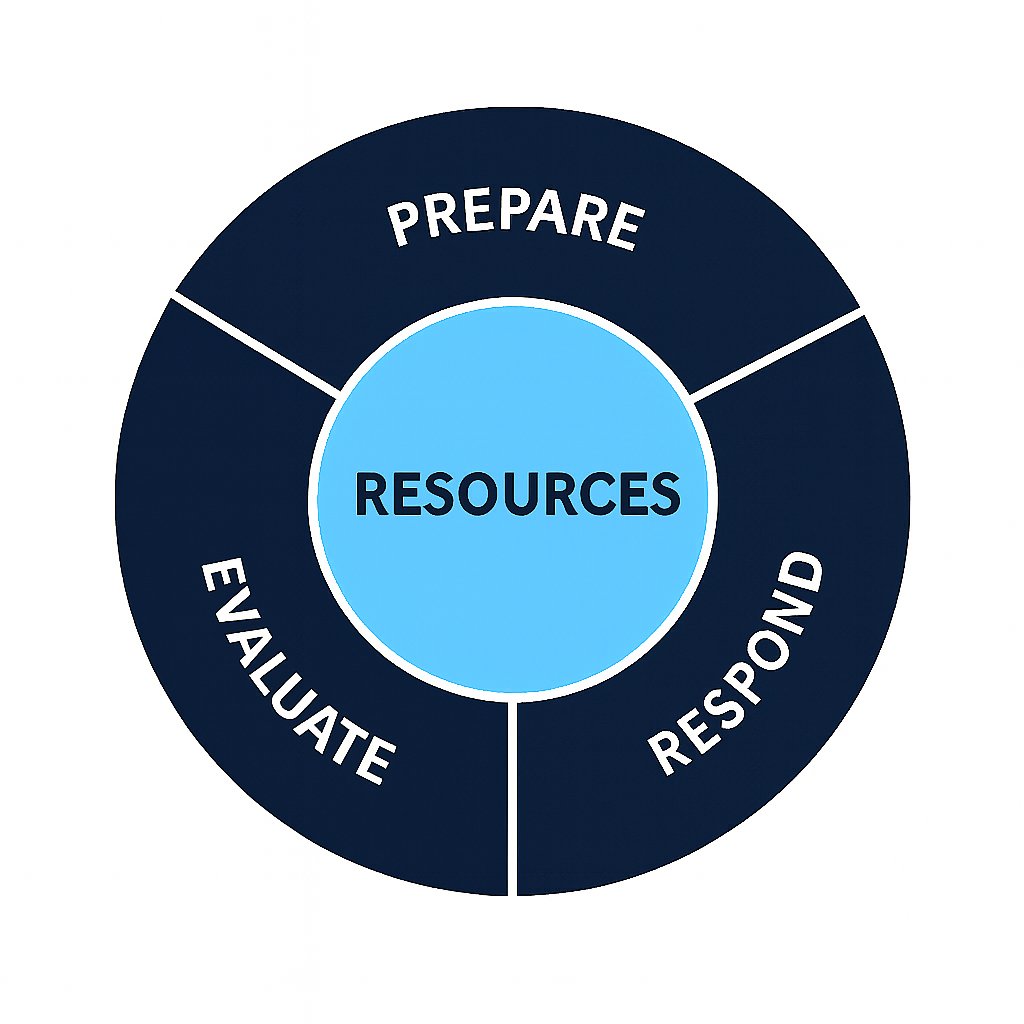
Resources Use Cases
Prepare
Tracking suspected heroin overdoses in CDC’s National Syndromic Surveillance Program
Tracking suspected heroin overdoses in CDC’s National Syndromic Surveillance Program: This paper analyzes emergency department syndromic data in the Centers for Disease Control and Prevention’s (CDC) National Syndromic Surveillance Program’s (NSSP) BioSense Platform to understand trends in suspected heroin overdose.
Going Beyond Chief Complaints to Identify Opioid-Related Emergency Department Visits
Going Beyond Chief Complaints to Identify Opioid-Related Emergency Department Visits: The purpose of this article is to identify heroin- and opioid-related emergency department visits using pre-diagnostic data and demonstrate the value of clinical notes to public health surveillance and situational awareness.
Development of Text-Based Algorithm for Opioid Overdose Identification in EMS Data
Development of Text-Based Algorithm for Opioid Overdose Identification in EMS Data: This article describes the development of a text-based algorithm using EMS narrative data to improve timely identification of opioid overdoses, strengthening data readiness and foundational methods needed to support overdose anomaly detection and public health response.
Opioid Surveillance Webinar Series #1: Rapid surveillance of overdose morbidity – Developing case definitions, building queries, and analyzing results
Opioid Surveillance Webinar Series #1: Rapid surveillance of overdose morbidity – Developing case definitions, building queries, and analyzing results: This presentation describes how CDC has partnered with states to develop case definitions for all drug, opioid, and heroin within and outside of the NSSP/ESSENCE system, and lessons learned and things to consider for the rapid surveillance of opioid overdose.
Opioid Surveillance Webinar Series #3: Syndromic Surveillance Case Definition for Monitoring Opioid Related ED visits and Drug Overdose Surveillance Using Death Record, Poison Control, and ED Data
Opioid Surveillance Webinar Series #3: Syndromic Surveillance Case Definition for Monitoring Opioid Related ED visits and Drug Overdose Surveillance Using Death Record, Poison Control, and ED Data: This presentation discusses the development of a standard case definition for opioid abuse/poisoning, applicable in multiple jurisdictions.
Opioid Crisis Trending Topic in the NSSP Knowledge Repository
Opioid Crisis Trending Topic in the NSSP Knowledge Repository: The Opioid tag page on the Knowledge Repository offers a curated collection of syndromic surveillance case definitions, real-world analyses, and validation studies, focused on emergency department and EMS monitoring of suspected nonfatal and fatal opioid-related overdoses (including fentanyl, heroin, and all-opioid definitions).
Respond
Data Sharing Through Dashboards: The Who, What, Where, When, and Why
Data Sharing Through Dashboards: The Who, What, Where, When, and Why: Lightning talk webinar experience where you will see multiple examples of data dashboards and learn more about who they were created for, how they were developed, where and when the data is being shared, and what impact the dashboard has had on improving public health practice as presenters discuss their work on opioid, flu, and general disease surveillance dashboards.
Finding Chances to Intervene Before the Fatal Overdose: Linking ED and Mortality Data
Finding Chances to Intervene Before the Fatal Overdose: Linking ED and Mortality Data: This article discusses how the Missouri Department of Health and Senior Services links emergency department (ED) with death certificate mortality data in order to examine the prior medical history of opioid overdose victims leading up to their death.
Opioid Surveillance Webinar Series #2: Challenges and Implications of Postmarketing Surveillance of Prescription Opioids
Opioid Surveillance Webinar Series #2: Challenges and Implications of Postmarketing Surveillance of Prescription Opioids: This presentation addresses the unique challenges of surveillance or prescription opioid abuse and presents data from multiple perspectives on the issues and potential solution.
Evaluate
Evaluation of Syndromic Surveillance for Opioid Overdose Reporting in Illinois
- Evaluation of Syndromic Surveillance for Opioid Overdose Reporting in Illinois: An article that evaluates the capacity of the BioSense ESSENCE platform and pre-defined overdose queries to identify emergency department admissions related to opioid overdose, in compliance with 2018 mandatory overdose reporting laws in Illinois.
From Insight to Action Examples from the Field
Washington DC Department of Health
Hot Spots that Inform Targeted Outreach in Washington DC
The Washington DC Department of Health leverages a variety of data sources—including Emergency Department (ED) records, Emergency Medical Services (EMS) repositories, biospatial by ImageTrend (a platform that aggregates and standardizes EMS data in near real-time), and National Emergency Medical Services Information System (NEMSIS)—to identify overdose clusters and monitor trends across the city. Due to DC’s dense population, city-wide alerts have proven less useful for outreach. In response, DC Department of Health analyzes clusters, such as three overdoses within 500 feet in 24 hours, and has mapped neighborhood-level hot spots to share with partners to help target prevention resources where they are most needed. While the primary responsibility for direct overdose response falls to the Department of Behavioral Health, the Department of Health supports the city through surveillance, data sharing, and funding harm reduction programs. The data they have shared with community partners has informed DC Department of Health’s approach to emphasize harm reduction, outreach, and connecting people to wraparound services, helping residents stay safer and receive care through Live Long DC. They have developed strategies to share actionable information through geomapped alerts, dashboards, and partner communications via email list serv. By combining robust surveillance with strategic partnerships, DC Department of Health continues to improve prevention efforts and inform city-wide and community-level overdose interventions.
Great Lakes Inter-Tribal Epidemiology Center (GLITEC)
Behind the Data, Supporting Sovereignty
The Great Lakes Inter-Tribal Epidemiology Center (GLITEC) serves thirty-four Tribes and four Urban Indian Organizations across Michigan, Wisconsin, Minnesota, and Chicago. GLITEC provides critical backend data support while honoring Tribal data sovereignty. GLITEC’s role is to assist and empower Tribes in responding to overdose concerns while respecting each Tribes’ sovereignty and decision-making when it comes to their overdose anomaly response. While GLITEC does not initiate overdose responses, they offer response guidance, prevention, and harm reduction resources, including naloxone and fentanyl test strips, to Tribes. GLITEC further monitors trends using state syndromic surveillance data and are exploring obtaining access to Overdose Detection Mapping Application Program (ODMAP), which is a real-time overdose surveillance tool to facilitate quick response to overdoses. Some Tribes in the region currently utilize ODMAP while others are exploring the option; Tribes may share overdose data with GLITEC if they choose to do so.
Oklahoma State Department of Health's Data-Driven Approach to Overdose Prevention
The Oklahoma State Department of Health brings decades of experience and strong partnerships to overdose surveillance, including access to consistent, reliable data from a centralized medical examiner system covering all deaths statewide and the Prescription Drug Monitoring Program (PDMP). They have made significant strides in improving access and timeliness by establishing statewide, electronic Emergency Department (ED) data reported monthly and transitioning inpatient discharge data to quarterly reporting with a cloud-based system. While real-time syndromic surveillance and increased ODMAP uptake across the state remain areas for growth, the state has a strong foundation in place, including collaborations with hospitals, local health departments, and poison control. The Oklahoma Office of the Chief Medical Examiner is in the process of updating its statewide case management system, making overdose data even more accessible and actionable. By building on these strengths, the department is well-positioned to expand real-time surveillance and support communities across Oklahoma in responding to overdose challenges.
Rhode Island Department of Health
Connecting the Dots at the Rhode Island Department of Health (RIDOH)
RIDOH created an Opioid Overdose Integrated Surveillance System (ISS) that pairs Emergency Medical Services (EMS) runs with Emergency Department (ED) visits to track non-fatal overdoses statewide. By merging records using name, date of birth, and de-duplicating to one person per day, the system catches cases that one dataset alone might miss. EMS data arrive within an hour of an overdose and ED data within 48 hours, giving RIDOH a near real-time view of overdose trends. Triangulating data sources helps RIDOH identify hot spots to ensure a more complete picture of opioid overdose, improve early detection of anomalies, and inform tailored response strategies in Rhode Island.
For more information: https://ridoh-drug-overdose-surveillance-iss-rihealth.hub.arcgis.com/
Mapping and Responding to Overdose in Rhode Island
Rhode Island is divided into 11 overdose regions, each with its own anomaly threshold based on the previous year of data. RIDOH tracks these regions daily and uses a Levels of Response plan to guide the resources deployed and the partners and outreach involved, ranging from alerts for sudden spikes to strategies for sustained high burden. When thresholds are exceeded, RIDOH activates its Overdose Spike Alert Notification System, which alerts local leaders, public safety, healthcare providers, and community partners via email list serv about a sudden increase in non–fatal overdoses. Responses may include expanded outreach, harm reduction efforts, and emergency community meetings. Higher rates of overdose burden in a region warrant a greater response level. For instance, a region with a ‘Sustained High Rate of Overdose Burden’ may involve community partners for increased outreach and convene an emergency community meeting. This response plan drives timely action and helps integrate overdose anomaly data into real-time public health action.
RIDOH established a 7-day threshold system to send alerts when an overdose region’s nonfatal overdoses exceeded a level set at three standard deviations above the annual average count for that region. RIDOH developed a more prospective metric that examines overdose rates over the past six months. This approach compares each region’s overdose rate per 100,000 residents to the statewide rate, highlighting areas with sustained burden. By shifting focus from short-term spikes to longer-term trends, RIDOH can better target resources and prevention strategies where they’re most needed.
For more information: https://ridoh-drug-overdose-surveillance-iss-rihealth.hub.arcgis.com/
Partnering for Data-Driven Response and Outreach
RIDOH works closely with its diverse partners to ensure overdose data are translated into meaningful action. RIDOH’s evaluator monitors how peer-support and outreach workers use the data provided to adapt their community response, while system or response changes are shaped by input from those on the ground. To strengthen collaboration, RIDOH convenes three weekly meetings: one with treatment providers to share data updates, one with internal partners (including epidemiologists, Emergency Medical Services (EMS), laboratory and medical directors, and High Intensity Drug Trafficking Area (HIDTA) officials), and one with peer support and community partners. These structured touchpoints foster consistent communication across agencies and communities. In addition, RIDOH is developing data-sharing agreements with the Department of Corrections and contributes to Prevent Overdose RI, a statewide hub for naloxone access and other resources. Together, this collaborative ecosystem integrates diverse datasets with community outreach, making overdose response more informed, coordinated, and responsive.
Wyoming Department of Health
As a centralized state agency, the Wyoming Department of Health (WDH) leverages strong partnerships with law enforcement, Emergency Medical Services (EMS), Vital Records, and local prevention partners to monitor and respond to overdose trends across the state. They draw on a wide range of data sources—including mortality data, hospital discharge, outpatient visits, Prescription Drug Monitoring Program (PDMP), EMS, law enforcement, and poison control reports—to guide their work. A partnership between WDH, ODMAP, and the HIDTA program has enabled development and distribution of anomaly alerts and collaboration with prevention partners and law enforcement on local response. The WDH prevention network, through the Community Prevention Unit (CPU), spans all 23 counties in the state, supporting naloxone distribution and targeted overdose prevention. They also work with five independent county health departments. All counties benefit from the agency’s centralized expertise to help fill gaps caused by limited local resources. While county-level response capacity can be constrained and alert deployment must be carefully managed, Wyoming is steadily strengthening infrastructure, expanding prevention efforts, and enhancing coordination with neighboring states.
Continue The Toolkit
< Previous: Policy, Program Planning, and Evaluation
Next: Tools and Templates >